Facing an osteosarcoma diagnosis often means having to make big surgical decisions very quickly during an overwhelming time. The Osteosarcoma Decision Aid was created to help patients, families, and caregivers better understand their options and participate in care decisions. Founder Janet Panoch shared with us what inspired the creation of Osteosarcoma Decision Aid, who it’s meant to support, and how it’s helping people around the world navigate these choices with more clarity and confidence.
Can you share the story behind OS Decision Aid and what inspired its creation?
The seeds for the Osteosarcoma Decision Aid (OS DA) started soon after my own daughter’s diagnosis at age 12 in 2007. Back then, I had very few online options for communicating with other families. The first Osteosarcoma Facebook group wasn’t created until 2010 so until then, I relied on an osteosarcoma listserv run by the Association of Cancer Online Resources (ACOR). That’s how I met many people, including patients like Ann Graham, parents like Bark Akan, and clinicians like Pete Anderson – all of whom are involved with MIB.
Zoe’s tumor was in her distal femur and she was not offered options for surgery. She was told she’d have a limb salvage surgery, but she could never run or jump. I remember her surgeon saying, “Even if someone is chasing you, you should never run.” Zoe asked about amputation. She said she knew people could run and jump with a prosthesis and asked her surgeon about it. But he said, no – if they can save the leg, then that’s what they’d do. They don’t amputate anymore. As a parent, I was glad they could save the leg. I wanted her life to go back to normal, and saving the leg gave me hope that she could have that.
Zoe had complications immediately following her limb salvage surgery. She had an infection that would not heal because she was on chemotherapy. She could never bear weight despite physical therapy due to severe pain. In less than a year, we discovered the cause: the implant was broken. Her first revision was in 2008, but she still suffered from pain and limited function due to scar tissue. I started to hear a few similar stories in the ACOR group, but there weren’t that many people in it, and exchanging emails back and forth was clunky. Once the Facebook group started, I began hearing many more stories of failed implants, chronic pain, and functional limitations such as an inability to bend the knee enough to walk. I reached out to these families and learned that while they also asked about amputation, they were only offered limb salvage surgery. Soon afterwards, I learned about rotationplasty as an option. The stories I heard were ones of deep regret from both patients and parents about the lack of information for options other than limb salvage surgery. That’s when I started learning about shared decision-making and the ethical obligation for patients to engage in medical decisions when there is no one clear best option for surgery.
The seeds for the OS DA were planted early (2008-2010) after hearing so many families also experienced common limb salvage issues of pain, limited function, and additional surgeries. In 2013, I went back to school to pursue a PhD in Health Communication and started working on clinical research teams that were developing decision aids in obstetrics and in urology. To prepare for the OS DA, I organized patients, parents, orthopedic oncologists, medical oncologists, prosthetists, physical therapists, and mental health counselors to advise on the content and design. The Osteosarcoma Collaborative provided a grant in 2021 to move the OS DA into full development, and the site was published for free access in 2023.
Who is OS Decision Aid designed for, and how do you hope it supports patients, families, and caregivers?
The Osteosarcoma Decision Aid is designed for everyone involved in shared decision-making for osteosarcoma tumor resection when the knee is involved. I hope the Decision Aid helps patients, families, and caregivers engage in shared decision-making with their surgeons by asking informed questions. I also hope that it helps people think about what kind of quality of life they want for themselves or their child so they can formulate more critical questions about long-term outcomes.
What gaps or challenges in osteosarcoma care did this resource aim to address?
In my research, patients and families struggle to understand the risks, benefits, and common issues of their options in a clear and timely fashion. Surgeons were saying much the same – they had limited time to explain the options in detail. Everyone involved described families as devastated and overwhelmed, making it harder to process complex medical information. The Osteosarcoma Decision Aid addresses the needs for both the patient-facing side and for the surgeons and includes resources and organizations like MIB Agents, printable PDFs, 20 questions to ask your surgeon, and links to patient stories.
Can you walk us through how OS Decision Aid works?
The OS DA has its own website – www.osteosarcomadecisionaid.com – and it is a public site, not connected with a hospital or institution. Designing it this way means that anyone can view the information at any time point - early, midway, or late in diagnosis. There are four tabs for these sections: Making Your Decision, Know Your Options, You & Your Surgeon, and Life After Surgery. Within each section are links to research studies, patient stories, and printable PDFs.
Sometimes surgeons inform their patients about the OS DA so they can be better prepared to discuss options at a later consultation. I see a big push from the patient-facing side in the Osteosarcoma Facebook groups. Families often find these groups soon after diagnosis and post questions about orthopedic options. Inevitably, someone will post the link and suggest they look there. Often, two of the three options are mentioned by someone new and a group member will point out a third option. That’s usually how people find out about rotationplasty if it hasn’t been mentioned by their surgeon.
Interestingly, in my early research with patients who used the OS DA, they were using that information to make a later decision to have another limb salvage revision or pivot to amputation or rotationplasty. Here is a testimonial from a person who had limb salvage over 25 years and later chose a rotationplasty:
“Even as a NED patient, the Osteosarcoma Decision Aid has been a great benefit to me during two separate decision making processes on my 25+ year old LSS. Being able to see not only the options, but how other patients have felt about them, is something I am not always able to get in surgical appointments. It is also a centralized location of many resource links I am able to access as I have sorted through evolving concerns and needs.” – Whitney Bickers, Patient
How have you seen OS Decision Aid make an impact so far?
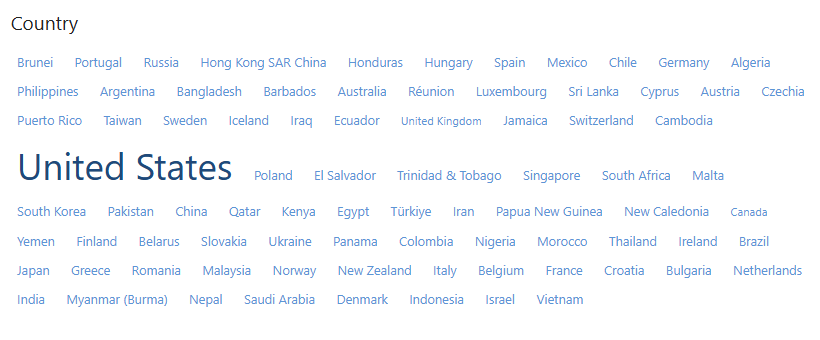
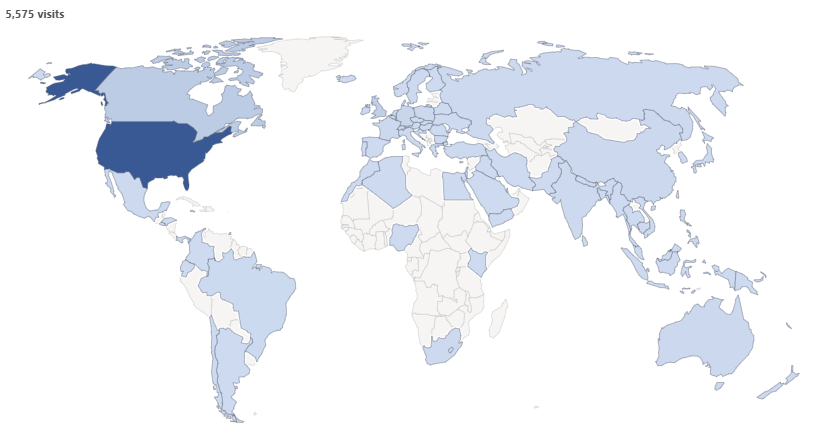
We know it’s being used. The OS DA was released on May 1, 2023, and to date, it has had 5,575 site visits in 82 different countries. Most visits are from the United States.
I attend the Musculoskeletal Tumor Society Conference, which is the premiere meeting for orthopedic oncologists. In 2023, I presented a poster on the history of the OS DA. In 2024 and 2025, I had podium presentations about my research with patients and families. I presented “Function is more important than looks!”: A Qualitative Analysis of Patient Reported Outcomes on Life After Bone Cancer Surgery last month with data from 155 participants indicating that quality of life is more important than appearance.
After these presentations, surgeons often have many questions and ask for more assistance in communication options to patients. In 2023, they asked for discussion cards to help guide the options discussion early or at diagnosis so patients aren’t overwhelmed with information. This year the big question was, “How do I get my people to at least consider rotationplasty?” I feel very fortunate that I get to engage with so many surgeons at this meeting. I hear directly from surgeons that they are using the OS DA with their patients. One surgeon has it on his website!
"Using the Osteosarcoma Decision Aid has transformed my approach to counseling patients making these impossibly difficult decisions. I use it both in the clinic and provide it to patients as a reference after our visit. It provides clear, comprehensive information that helps patients understand their treatment options, facilitating informed and shared decision-making. As a surgeon, I’ve found it invaluable in fostering more productive and reassuring discussions with my patients and their families.” Chris Collier, Orthopedic Oncologist
“We received the diagnosis in October 2023. Rotationplasty was immediately recommended. However, we sat down with our Orthopedic doctor in November, who used this site [www.osteosarcomadecisionaid.com] and related videos to walk us through our options. Thereafter, the doctor sent us this site to review on our own. This site is also what I used to help explain to family members why we made the decision that we made. January 2024 was the surgery date, and this site was pivotal in getting us there.” – Joe Coleman, Caregiver/Father
How can members of the MIB Agents community best use or share this resource?
MIB Agents are so well-connected with oncologists, and I hear from the people who used the OS DA that they learned about it from their oncologist or someone else on their healthcare team. Raising awareness of the site is pivotal to getting it to newly diagnosed patients when they need it the most. Continuing to include the rack card for FACTOR attendees is great, but also including it on social media, websites, and just by word of mouth. I would like to note that no person or institution benefits financially from the use of this site.


